
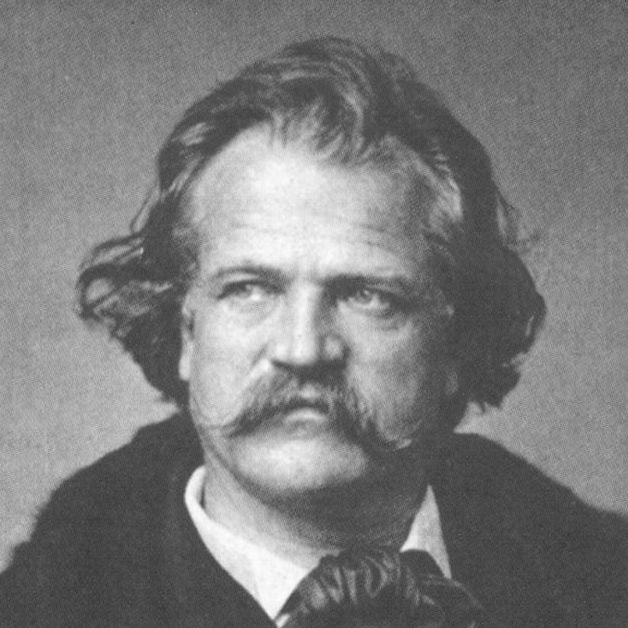
Johann Halbig was a notable German Classicist sculptor and university professor, born in 1814 in Donnersdorf. His initial artistic training came from his father, but his life took a challenging turn when, at seventeen, he was imprisoned for theft. After escaping, he was captured and received a public punishment, then fled to Munich.
In Munich, he lived with his older brother, Andreas, who connected him with Ernst Mayer, a teacher at the Munich Polytechnic School. Mayer recognized Halbig's artistic talent and took him under his wing, enabling him to attend the Munich Art Academy. After an educational trip to Italy, he garnered the attention of Bavarian King Ludwig I, who commissioned him for various decorative works and portraits intended for locations such as the Ruhmeshalle and the Walhalla.
Following Mayer's untimely death, Halbig took over his role in 1845 as the professor of bossier art at the Polytechnic School. He continued his work for King Ludwig I and subsequently received commissions from Ludwig's successors, Maximilian II and Ludwig II, creating numerous tomb monuments and memorials.