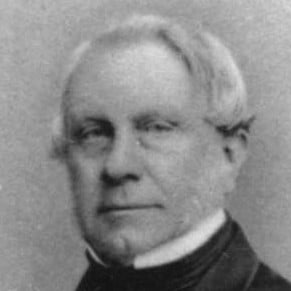
Theodor Wagner was a German classicist sculptor and university professor, born in 1800 in Stuttgart. He was the son of Johann Ludwig Albert Wagner, a coin medallist at the royal mint.
At the age of twelve, Wagner became a student of Johann Heinrich Dannecker, studying drawing and modelling at Dannecker's studio. After nearly a decade of intense study, Wagner travelled to Rome in 1823, where he worked under Bertel Thorvaldsen's direction. While there, King Wilhelm of Württemberg commissioned him to sculpt a marble statue of Saint Luke for Queen Katharina's burial chapel.
After spending years in Rome studying antique sculpture, Wagner returned to Germany, where the king commissioned him to create artworks for the Rosenstein palace and numerous castles and museums. Notably, he crafted reliefs for the Jubilee Column on Stuttgart's Schlossplatz, and several life-like busts, including those of Oberhofbaumeister Giovanni Salucci and poets Wilhelm Hauff and Friedrich Schiller.
In 1835, Wagner updated the monument to Konrad Widerholt and his wife, replacing the busts with his own sandstone versions. He continued to create sculptures, such as a sandstone kneeling nymph for a public fountain in 1842, based on Dannecker's model.
Wagner's accomplishments were recognized with an appointment as a professor at the Stuttgart Academy of Arts in 1836. He also served as an inspector of the King of Württemberg's sculptural collections. In 1841, Wagner published a biography of his mentor, Dannecker, listing and describing his works.