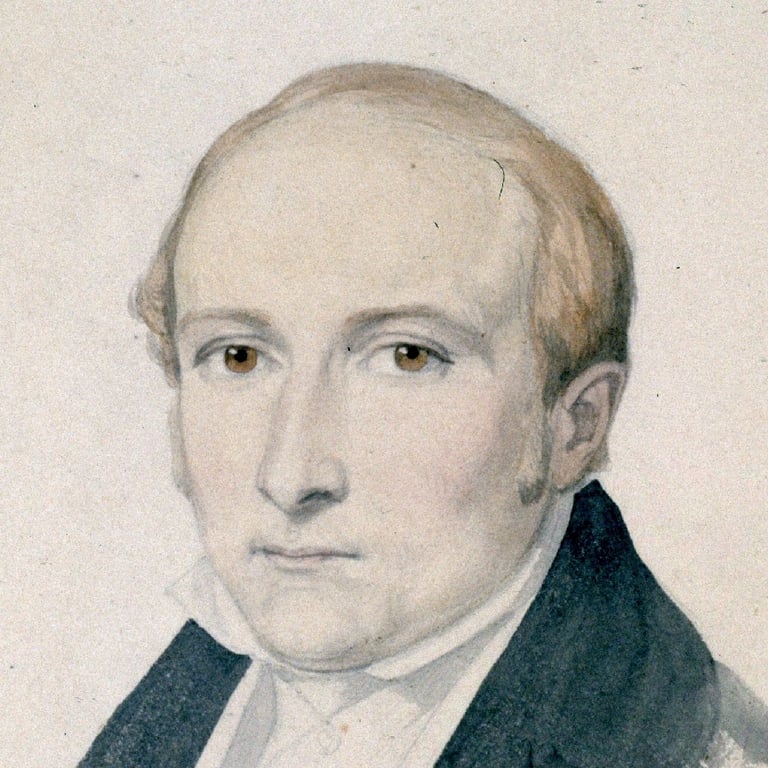
Franz Woltreck, born in 1800 in Zerbst, was a notable German sculptor. As a child, he was inspired by the turbulent times of 1813 to carve figures of soldiers and horsemen, which he covered with colored paper. Woltreck apprenticed with a metalworker, learning to create vessels and ornaments in gold, silver, and brass. This experience prompted his decision to formally study drawing and modeling in Vienna.
After completing his apprenticeship, Woltreck set off for Vienna. However, he made it only as far as Kassel, where he auditioned for Werner Henschel and subsequently became his pupil. In 1823, he was awarded a silver medal at the academy in Kassel, and from 1824, he received support from Leopold IV Frederick von Anhalt.
In October 1824, Woltreck moved to Paris, where he worked as a stucco plasterer and trained in drawing with Eustache-Hyacinthe Langlois. André Dutertre introduced him to Pierre Jean David d'Angers, who provided instruction in modelling. Woltreck fell ill in Paris in 1829 and returned to Germany the following year.
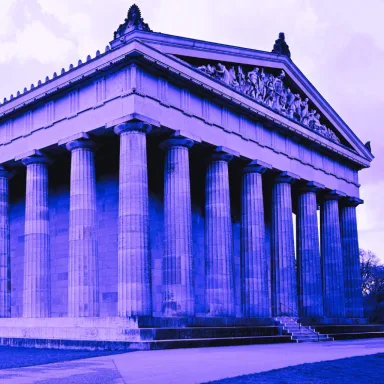
During his career, Woltreck formed associations with many notable figures, including Bertel Thorvaldsen. He spent time in Munich during 1836 and 1837, creating two busts for the Walhalla and many portrait medallions.
By April 1839, Woltreck was back in Munich, where he sculpted another bust for the Walhalla before returning to Paris. There, he created a life-sized bust of Samuel Hahnemann. In the summer of 1840, he traveled to Carrara and spent the following years alternating between Rome and Carrara.
Woltreck had aspired to compile a collection of bronze portraits of his famous contemporaries to be housed in the library pavilion on the platform of Eisenhart in Wörlitz Park. However, most of these portraits were only realized in plaster and, after initially being stored in Kühnau Palace near Dessau, they ultimately ended up in the Zerbst State Museum. The State Coin Collection in Munich acquired 17 bronze casts of the medallions he designed in 1837.