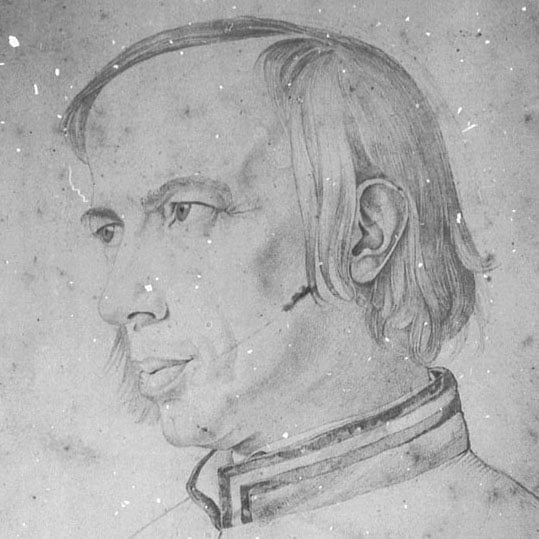
Konrad Eberhard was a German sculptor and professor of sculpture at the Academy of Fine Arts in Munich. He was born in the town of Söflingen near Ulm and began his artistic training in 1785 in the workshop of the sculptor Johann Nepomuk Dietrich in Augsburg. In 1788, Eberhard traveled to Italy, where he studied the works of the Italian Renaissance masters in Florence and Rome.
After returning to Germany in 1794, Eberhard established himself as a sculptor in Augsburg, where he received several important commissions for religious sculptures and monuments. In 1809, he moved to Munich, where he was appointed professor of sculpture at the Academy of Fine Arts. Eberhard's teaching style was focused on the study of classical sculpture, and he was known for his technical skill and attention to detail.
Eberhard's works were heavily influenced by the neoclassical style, which was popular in Germany during his lifetime. He created numerous sculptures of mythological and historical figures, as well as religious sculptures for churches and cathedrals throughout Germany. Eberhard also worked on several public monuments, including the monument to Johann Wolfgang von Goethe in Frankfurt.
One of Eberhard's most notable works is the monument to King Ludwig I of Bavaria, located in the Frauenkirche in Munich. The monument, which was completed in 1853, depicts the king in a seated position, with allegorical figures representing the arts and sciences at his feet. The monument is considered one of Eberhard's finest works and is a testament to his technical skill and mastery of the neoclassical style.
Eberhard's contributions to the field of sculpture were widely recognized during his lifetime. He was awarded the title of Royal Bavarian Professor in 1818 and was made an honorary citizen of Munich in 1848. Today, Eberhard's works can be found in museums and public spaces throughout Germany, and he is remembered as one of the most important German sculptors of the 19th century.