
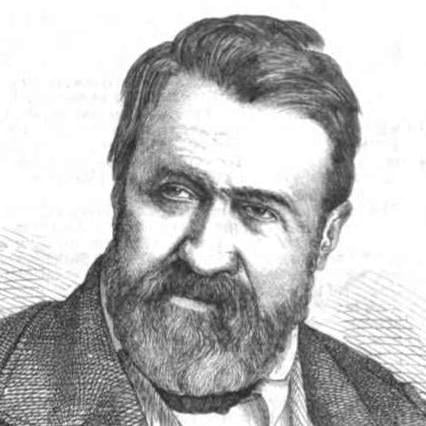
Heinrich Max Imhof, a Swiss sculptor of classicism, was born in 1798 in Bürglen, canton of Uri. He grew up in simple circumstances in Bifang near Bürglen, where he was recognized for his artistic talent by Franz Xaver Triner, his teacher and veduta painter, who gave him drawing lessons. At the age of 16, Triner convinced Imhof's parents to apprentice him to the wood sculptor Franz Abart in Kerns in 1811. Between 1814 and 1823, Imhof produced his first known professional carvings on the portal while his teacher was furnishing the parish church in Kerns with sculptural works.
In 1820, Imhof's mentor Johann Gottfried Ebel sponsored his further training in the studio of the Swabian sculptor Johann Heinrich Dannecker in Stuttgart. In 1824, Ebel financed Imhof's first study trip to Rome, which he took with his fellow sculptor friend Johann Jakob Oechslin. In Rome, Imhof familiarized himself with Thorvaldsen's classicist design principles in the workshop of the Danish sculptor Bertel Thorvaldsen. Imhof maintained contacts with fellow artists such as Ernst von Bandel, Bonaventura Genelli, and Heinrich Keller during his stay in the German artists' colony.
Imhof began model work on the statue of David with the head of Goliath in 1827, which Crown Prince Frederick William had made in a marble version for the furnishings of the Potsdam summer palace Charlottenhof. In addition to statues, Imhof received an increasing number of commissions for busts, including from the Bavarian King Ludwig I. His clientele also included Duke Maximilian von Leuchtenberg of the de Beauharnais family and the Russian imperial family.
In 1836, Imhof was appointed professor at the Academy of Arts in Athens, founded in 1836, where he also worked on the restoration of excavated antiquities and the caryatids of the Erechtheion. His poor health and lack of commissions led him back to Rome in 1838, where he lived and worked until the end of his life on May 4, 1869.
Imhof's daughter Mariette married the Austrian painter Othmar Brioschi. Among his students were the Fribourg Marcello and probably also the Basel Ferdinand Schlöth, with whom the relationship later turned into a spiteful rivalry.
Imhof was married since 1849 to the Protestant Henriette Ott from Zurich, with whom he had five daughters and two sons. Imhof's marble statue of David with the Head of Goliath, created in 1828/29 for the later Prussian King Frederick William IV, is probably the first sculpture that consciously sought to combine Thorvaldsen's classicism with the pictorial language of the Nazarenes. It marks the beginning of Imhof's lifelong preoccupation with the figures of the Old Testament, which he depicted with sensitive simplicity and to which he owed part of his fame. He attained an independent position within the widely ramified Thorvaldsen school by incorporating motifs of movement into the Late Classicist formal language, which was influenced by the Danish artist-entrepreneur and oriented toward calm and restrained gestures.