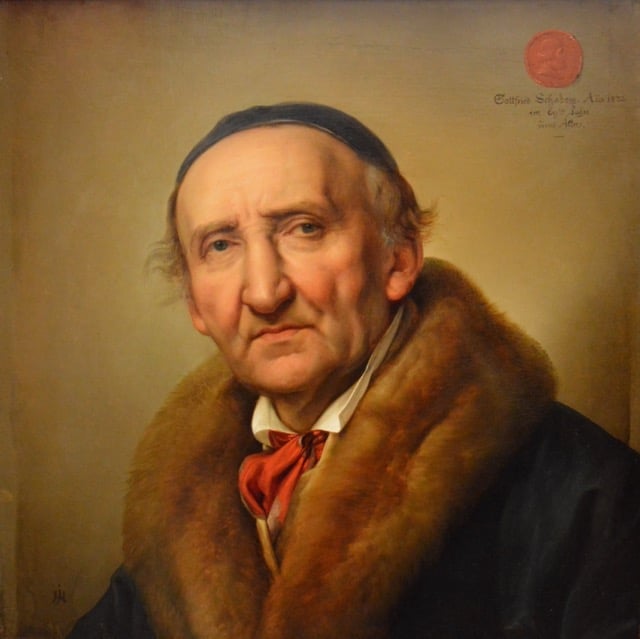
Johann Gottfried Schadow's beginnings were humble, born in Berlin to a poor tailor. But he found his calling as a sculptor, training under Antoine Tassaert, who was patronized by Frederick the Great. Despite being offered the hand of Tassaert's daughter in marriage, Schadow chose to elope with a Jewish girl, Marianne Devidel in Rome. Surprisingly, Tassaert condoned the offence and even furnished money for their stay in Italy.
Schadow's talent and hard work paid off, as he won the sculptor's prize from the Accademia di San Luca in 1786, after being influenced by the sculptor Antonio Canova during his stay in Rome. He returned to Berlin in 1788 to succeed Tassaert as sculptor to the court and secretary to the Prussian Academy of Arts. Schadow went on to create over 200 works, varied in style and subject, including ambitious efforts like Frederick the Great in Stettin, Blücher in Rostock, and Luther in Wittenberg.
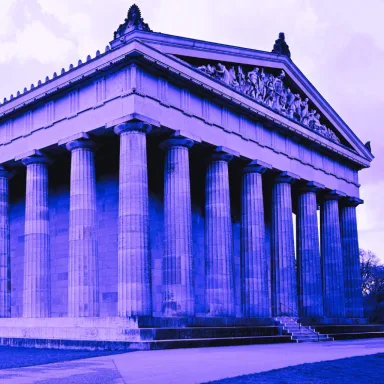
Schadow's portrait statues of Frederick the Great and the Princess Monument Louise and her sister Frederica with the princesses Louise and Federica became very popular. However, the latter was copied many times illegally, leading to a temporary dispute between his gypsum modeler Beyer and the sculptor in September 1795. Schadow's busts, including seventeen colossal heads in the Walhalla, Ratisbon, were also highly regarded, and he produced over thirty church monuments and memorial works.
While he hardly ranks among Christian sculptors, Schadow is claimed by classicists and idealists. He served as the director of the Berlin Academy, where he had great influence, and wrote on topics like the proportions of the human figure and national physiognomy. Schadow's interest in physiognomy is documented by the drawing he made of Harry Maitey, the first Hawaiian in Prussia.
Schadow developed a friendship with Johann Wolfgang von Goethe, creating 12 bronze medals of the renowned poet. In 2009, one such medal was bestowed upon Dr. Daisaku Ikeda by the Goethe Institute in recognition of his contributions to peace and Goethe's philosophy.
Schadow died in Berlin in 1850, leaving behind a legacy in his sons Rudolph and Friedrich Wilhelm, notable for their sculpture and painting, respectively. Today, some of Schadow's sculptures and busts are displayed in the Friedrichswerdersche Kirche and the Alte Nationalgalerie in Berlin.